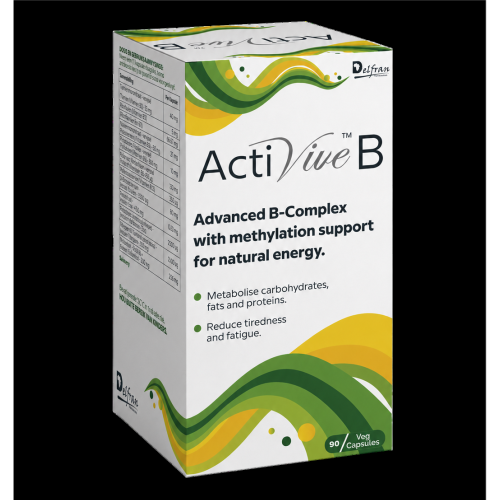
ActiVive™ B
Vitamin B Complex
ActiVive™ B is an advanced B-Complex supplement with methylation support for natural energy.
ActiVive™ B
Welcome to ActiVive™ B Vitamin B Complex: Supporting Energy, Metabolism & Nervous System Health.
ActiVive™ B Vitamin B Complex is a carefully formulated supplement designed to support overall wellbeing by helping maintain healthy energy levels, normal metabolism, and proper nervous system function. By combining essential B vitamins, ActiVive™ B helps support daily vitality, cognitive performance, and overall nutritional balance.
Why ActiVive™ B?
Key Ingredients and their Benefits:
Vitamin B1 (Thiamine):
Helps convert carbohydrates into energy and supports normal nerve and muscle function. It plays a key role in maintaining energy levels and nervous system health.
Vitamin B2 (Riboflavin):
Supports energy production and helps the body metabolise fats, proteins, and carbohydrates. It also contributes to healthy skin and vision.
Vitamin B3 (Niacin):
Important for energy metabolism and helps support normal psychological function. It also contributes to healthy skin and nervous system support.
Vitamin B5 (Pantothenic Acid):
Known as the “energy vitamin,” it helps the body produce energy from food and supports the synthesis of hormones and neurotransmitters.
Vitamin B6 (Pyridoxine):
Supports brain health, mood regulation, and the production of neurotransmitters like serotonin and dopamine. Also helps with red blood cell formation.
Folate (Vitamin B9):
Essential for DNA synthesis and cell division. It supports healthy red blood cell formation and is important for cognitive and cardiovascular health.
Vitamin B12 (Cobalamin):
Crucial for red blood cell formation, nerve function, and energy production. Helps reduce fatigue and supports brain health and concentration.
Vitamin B12 (Cobalamin):
Crucial for red blood cell formation, nerve function, and energy production. Helps reduce fatigue and supports brain health and concentration.
Choline:
Supports brain development, memory, and liver function. It is also involved in neurotransmitter production (acetylcholine), which supports focus and cognitive performance.
Zinc:
Supports immune function, cognitive performance, and normal DNA synthesis. It also plays a role in energy metabolism and hormone balance.
Manganese:
Helps with bone formation, antioxidant protection, and energy metabolism. It supports the body’s natural enzyme systems.
Molybdenum:
A trace mineral that helps the body break down sulfur-containing amino acids and supports normal detoxification enzyme function.
NAC (N-Acetyl Cysteine):
Supports the production of glutathione, one of the body’s most important antioxidants. Helps with cellular protection and supports liver detox pathways.
More about this premium combination of essential vitamins and minerals and the effects to thyroid health:
Iodine:
Iodine is an essential mineral required for the production of thyroid hormones [1]. The thyroid gland incorporates iodine into thyroid hormones, namely triiodothyronine (T3) and thyroxine (T4). Adequate iodine intake is essential for maintaining normal thyroid function [1,2].
Selenium:
Selenium is a trace mineral with antioxidant properties. It is involved in the metabolism of thyroid hormones, particularly in the conversion of T4 into the active form T3. Selenium also plays a possible role in protecting the thyroid gland from oxidative damage [3,4].
Zinc:
Zinc is a mineral that is essential for various enzymatic processes in the body. It is involved in the synthesis and conversion of thyroid hormones. Possible Zinc deficiency has been associated with impaired thyroid function [5,6].
Vitamin A:
Vitamin A is important for the development and differentiation of cells, including those in the thyroid gland. It also may play a role in regulating thyroid hormone metabolism and supporting immune function [7,8].
Magnesium:
Hypothyroidism may lead to reduced magnesium levels [9].
A study found that low serum magnesium was associated with abnormal thyroid function, which was improved after supplemental magnesium therapy [10].
Another study showed evidence of a possible effect of Zinc in combination with Selenium on thyroid function of overweight or obese female hypothyroid patients [11].
Studies have shown that Zinc, vitamin A, and magnesium supplementation may have beneficial effects in patients with hypothyroidism and in diseases associated with hyperthyroidism [12].
Vitamin D:
Vitamin D receptors are present in the thyroid gland, and vitamin D may have a role in regulating thyroid hormone production and immune function. Deficiency in vitamin D has been linked to autoimmune thyroid disorders [13, 14].
Vitamin D deficiency or insufficiency may increase the rate of autoimmune diseases such as Hashimoto’s Thyroiditis and Graves’ Disease [15].
Vitamin D deficiency is common in endocrine disorders. Supplementing with vitamin D may restore normal levels. In Hashimoto’s disease, low vitamin D is linked to higher anti-TPO antibodies and thyroid volume. Some studies show supplementation reduces antibodies and TSH levels. In Grave’s disease, vitamin D levels correlate with thyroid volume and exophthalmos. Overall, Vitamin D deficiency is highly prevalent in endocrine disorders and its supplementation appears to have numerous beneficial effects [16].
A study demonstrated that deficiencies in vitamin B12, B9 (folic acid), and Vit-D have a notable impact on thyroid function. Additionally, essential micronutrients like copper, iron, and zinc (p < 0.05) are significantly linked to serum free T3 levels [17].
- World Health Organization (WHO). (2007). Iodine status worldwide: WHO global database on iodine deficiency. Geneva: World Health Organization. Retrieved from https://www.who.int/nutrition/publications/micronutrients/iodine_deficiency/9789241595827/en/
- Zimmermann, M. B. (2009). Iodine deficiency. Endocrine Reviews, 30(4), 376-408. doi: 10.1210/er.2009-0011
- Rayman, M. P. (2012). Selenium and human health. The Lancet, 379(9822), 1256-1268. doi: 10.1016/S0140-6736(11)61452-9
- Duntas, L. H. (2015). Selenium and the thyroid: A close-knit connection. The Journal of Clinical Endocrinology & Metabolism, 100(8), 2690-2699. doi: 10.1210/jc.2015-2222
- Prasad, A. S., Beck, F. W., Bao, B., & Fitzgerald, J. T. (2007). Zinc supplementation decreases incidence of infections in the elderly: Effect of zinc on generation of cytokines and oxidative stress. The American Journal of Clinical Nutrition, 85(3), 837-844. doi: 10.1093/ajcn/85.3.837
- Siva Prasad, B. B., Bithika, M., & Senthil Kumar, K. S. (2012). Zinc status and its association with the health of adolescents: A review. International Journal of Research in Pharmaceutical and Biomedical Sciences, 3(2), 361-365. Retrieved from http://ijrpbsonline.com/files/12-100.pdf
- Zimmermann, M. B. (2007). The influence of vitamin A on immune function and infection. The Proceedings of the Nutrition Society, 67(3), 283-295. doi: 10.1017/S0029665108007175
- World Health Organization (WHO). (2009). Global prevalence of vitamin A deficiency in populations at risk 1995-2005. WHO Global Database on Vitamin A Deficiency. Geneva: World Health Organization. Retrieved from https://www.who.int/vmnis/database/vitamina/x/en/
- Un Nisa, F., Mumtaz, A., Ullah, M.I., Atif, M. and Sami, W., 2013. Determination of serum zinc and magnesium levels in patients with hypothyroidism. Trace Elements and Electrolytes, pp.1-5.
- Moncayo, R. and Moncayo, H., 2015. The WOMED model of benign thyroid disease: acquired magnesium deficiency due to physical and psychological stressors relates to dysfunction of oxidative phosphorylation. BBA clinical, 3, pp.44-64.
- Rabbani, E., Golgiri, F., Janani, L., Moradi, N., Fallah, S., Abiri, B. and Vafa, M., 2021. Randomized study of the effects of zinc, vitamin a, and magnesium co-supplementation on thyroid function, oxidative stress, and hs-CRP in patients with hypothyroidism. Biological Trace Element Research, 199, pp.4074-4083.
- Mahmoodianfard, S., Vafa, M., Golgiri, F., Khoshniat, M., Gohari, M., Solati, Z. and Djalali, M., 2015. Effects of zinc and selenium supplementation on thyroid function in overweight and obese hypothyroid female patients: a randomized double-blind controlled trial. Journal of the American College of Nutrition, 34(5), pp.391-399.
- Tamer, G., Arik, S., Tamer, I., & Coksert, D. (2012). Relative vitamin D insufficiency in Hashimoto’s thyroiditis. Thyroid, 22(8), 880-884. doi: 10.1089/thy.2011.0486
- Muscogiuri, G., Altieri, B., Annweiler, C., Balercia, G., Pal, H. B., Boucher, B. J., … Colao, A. (2013). Vitamin D and chronic diseases: The current state of the art. Archives of Toxicology, 87(10), 1923-1940. doi: 10.1007/s00204-013-1079-4
- Khozam, S.A., Sumaili, A.M., Alflan, M.A., Shawabkeh, R.A.A.S. and Sumaili, A., 2022. Association between vitamin D deficiency and autoimmune thyroid disorder: A systematic review. Cureus, 14(6).
- Galușca, D., Popoviciu, M.S., Babeș, E.E., Vidican, M., Zaha, A.A., Babeș, V.V., Jurca, A.D., Zaha, D.C. and Bodog, F., 2022. Vitamin D implications and effect of supplementation in endocrine disorders: autoimmune thyroid disorders (Hashimoto’s disease and Grave’s disease), diabetes mellitus and obesity. Medicina, 58(2), p.194.
- Krishnamurthy, H.K., Reddy, S., Jayaraman, V., Krishna, K., Song, Q., Rajasekaran, K.E., Wang, T., Bei, K. and Rajasekaran, J.J., 2021. Effect of micronutrients on thyroid parameters. Journal of Thyroid Research, 2021, pp.1-8.
*It is recommended to consult with a healthcare professional before starting any new supplement or health regimen.
*This unregistered medicine has not been evaluated by the SAHPRA for its quality, safety or intended use.
ActiVive™ B
|
Composition |
Per Capsule |
|
Thiamine Mononitrate Providing Thiamine (Vitamin B1) – 33 mg |
40 mg |
|
Riboflavin (Vitamin B2) |
5 mg |
|
Niacin (Vitamin B3) |
66.67 mg |
|
Calcium Pantothenate Providing Pantothenic Acid (Vitamin B5) – 25 mg |
27 mg |
|
Pyridoxal-5′-Phosphate Providing Pyridoxine (Vitamin B6) – 8.16 mg |
12 mg |
|
Calcium-L-Methylfolate Providing Folate (Folic Acid) – 344.66 µg |
367 µg |
|
Methylcobalamin (Vitamin B12) |
100 µg |
|
Choline Bitartrate Providing Choline – 32.80 mg |
80 mg |
|
Zinc Oxide Providing Zinc – 0.50 mg |
0.63 mg |
|
Molybdenum Amino Acid Chelate Providing Molybdenum – 5 µg |
2500 µg |
|
Manganese (ii) Sulphate Monohydrate Providing Manganese – 0.13 mg |
0.40 mg |
|
N-Acetyl-L-Cysteine (NAC) Providing L-Cysteine – 200 mg |
266 mg |
90 off-white ThyroVive™ Thyroid support vegetable capsules.
Barcode: 6009801022635
NAPPI code: 3006770001